Robotic-Assisted Bronchoscopy Improves Early Lung Cancer Detection
Robotic-assisted bronchoscopy is the latest tool used by specialists with Virtua’s Comprehensive Lung Program to diagnose and treat lung cancer.

By Mark Weir, MD, Interventional Pulmonologist, Virtua Pulmonology
If a suspicious spot is found on your lungs, you want to know what it is, and just as importantly, what to do about it.
Robotic-assisted bronchoscopy, combined with intraoperative CT imaging, is an advanced, minimally invasive procedure that Virtua interventional pulmonologists use to diagnose lung cancer earlier and more accurately than ever before.
What is robotic-assisted bronchoscopy?
Lung cancer is the leading cause of cancer deaths worldwide. Because symptoms often don’t appear until the disease has advanced to other parts of the body, early detection is critical. That’s why doctors encourage current and former smokers to undergo a low-dose CT scan to look for suspicious nodules that could be cancer.
At the Penn Medicine | Virtua Health Cancer Program, nurse navigators help coordinate your scans and connect you with pulmonologists, oncologists, and surgeons who specialize in diagnosing and treating lung nodules.
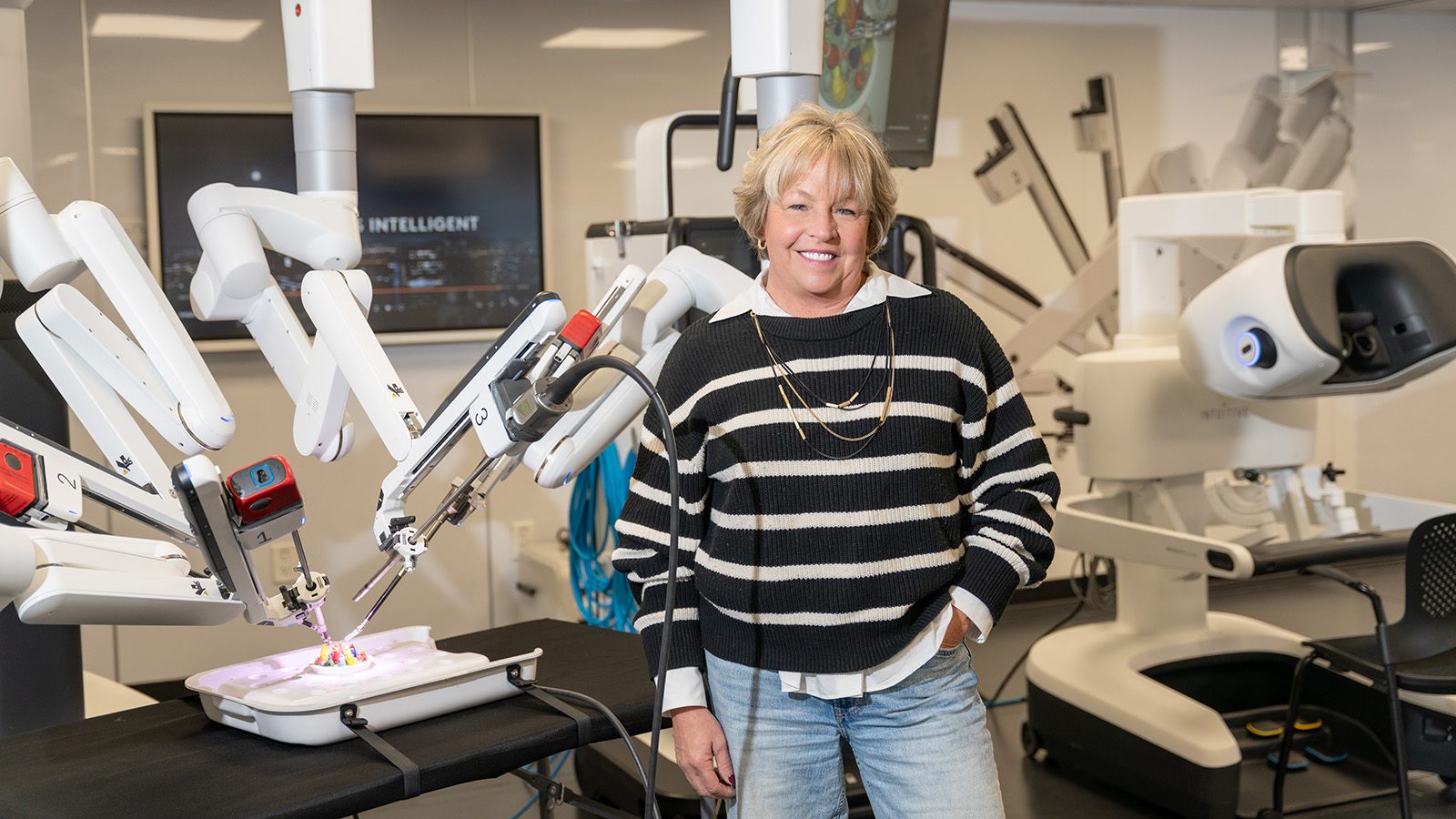
Robotic-assisted bronchoscopy uses a thin, flexible tube called a bronchoscope that travels through your lung’s airways to sample a nodule for testing. Traditional bronchoscopy was limited by the size of your lungs' airways and the complexity of the many tight turns involved.
The robotic system precisely translates my movements through a controller, one that will feel familiar to anyone who has used a video game system, allowing me to complete those turns and acute angles and reach almost any area of the lung.
How does robotic-assisted bronchoscopy reach lung nodules and detect lung cancer?
Through a traditional bronchoscope, we are able to reach only about 60% of nodules for diagnosis. With robotic-assisted bronchoscopy and intraoperative CT guidance, that figure rises to 80% to 90% with better access to hard-to-reach peripheral lung nodules.
The technology also reduces the need for more-invasive approaches, such as a needle biopsy through the chest wall, which carries a higher risk of complications like a collapsed lung.
During the procedure, we also perform an endobronchial ultrasound (EBUS) to evaluate the lymph nodes for signs of cancer. If lymph nodes are involved, it indicates the cancer has spread to a more advanced stage, a critical factor in determining the right treatment approach.
If cancer is found, you will be promptly referred to the appropriate treatment team for surgery, radiation therapy, or systemic therapy such as chemotherapy or immunotherapy.
Thanks to this new technology, no area of the lung is beyond our reach. And the earlier we can make a diagnosis, the better your treatment options and outcomes.
Should you get a lung cancer screening?
Early-stage lung cancer rarely causes symptoms. A low-dose CT scan can detect nodules at a stage when they're most treatable. Talk to your doctor about whether screening is right for you.
There's So Much More to Explore