Can a Hole in Your Heart Cause a Stroke? Understanding Patent Foramen Ovale (PFO)
One in four people have a patent foramen ovale (PFO), a small opening between the upper chambers of the heart. Here's how to treat a PFO and reduce the risk of stroke.

By Juan Ortega-Legaspi, MD, PhD, FACC, Heart Failure Specialist, Virtua Heart Failure Program
When actor and musician Donald Glover had a stroke last year, he traced it to a hole in his heart, called a patent foramen ovale (PFO). Glover had to cancel his tour, but thankfully recovered.
So, what is a PFO, and should we be concerned about it?
What causes a PFO?
A PFO is a flaplike opening between the upper two chambers of the heart that did not close the way it should after birth.
One in four of us have a flap that remains open, or patent. Most people with a PFO have no idea they have it and do not experience any symptoms.
PFOs are associated with an increased likelihood of migraine headaches—for reasons that are not well understood—and stroke, especially in younger people who don’t have other risk factors.
What is the treatment for PFO?
If your health care provider discovers you have a PFO, they may recommend closing it. Often, this is done through a minimally invasive procedure.
An interventional cardiologist or cardiac surgeon will thread a catheter through a blood vessel in your groin to your heart. A small device called a septal occluder is placed to cover the flap. Over time, heart tissue grows over the occluder, sealing it in place.
Blood thinners also may be recommended, especially if you’ve had a stroke.
How to reduce your stroke risk
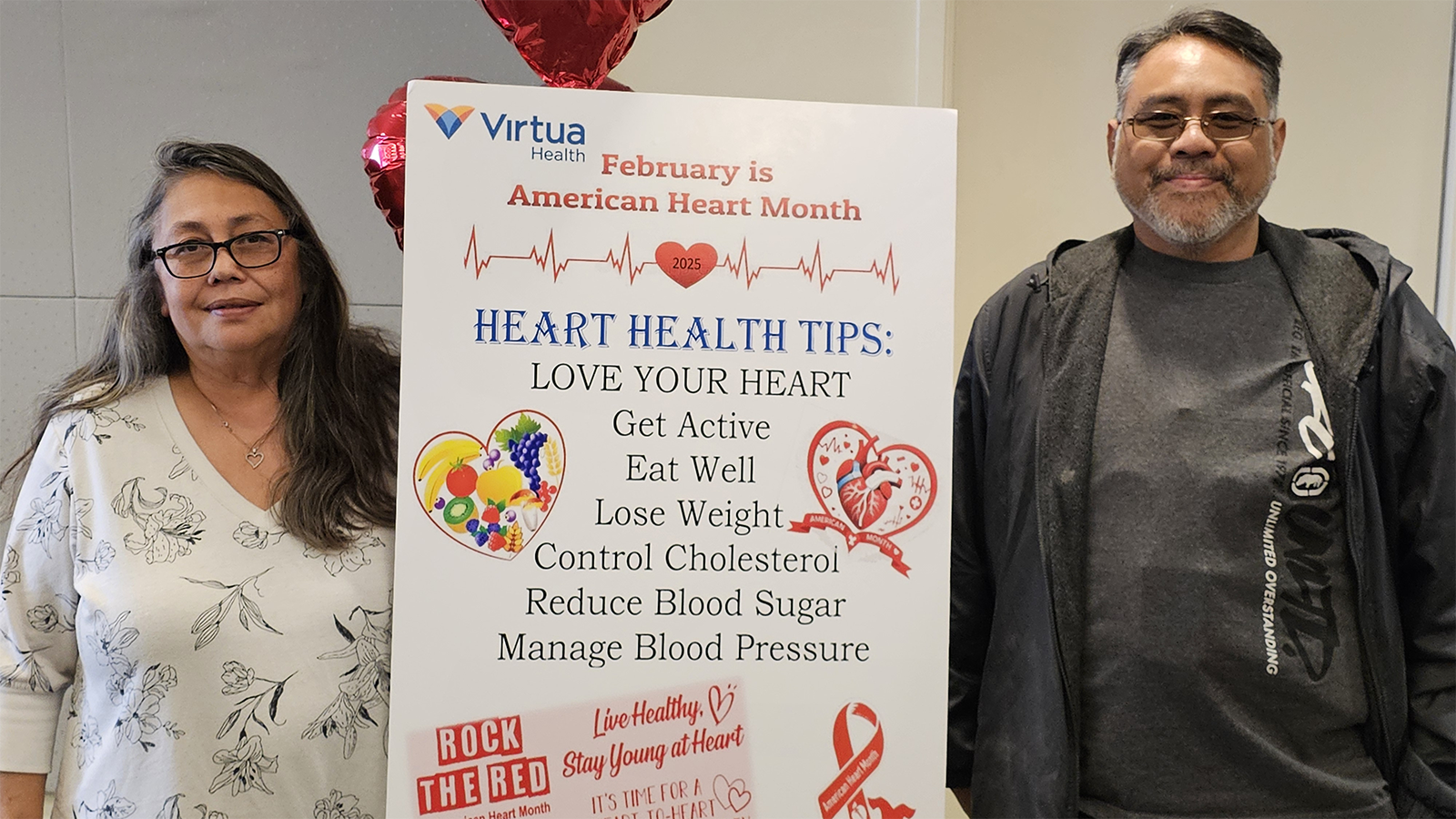
The best way to prevent a stroke, regardless of whether you have a PFO, is to improve your overall cardiovascular health:
- Eat a healthy diet, including fresh fruits and vegetables, lean proteins, and whole grains.
- Exercise for at least 30 minutes a day.
- Develop a structured program that improves your VO2 max, the maximum rate of oxygen consumption your body can utilize during intense exercise.
- Maintain a healthy weight by working with a health care professional to lose unwanted pounds.
- Take medicines for high blood pressure, high cholesterol, and diabetes, as needed.
- Get treatment for conditions that might increase your risk for stroke, such as atrial fibrillation.
- Don’t smoke or drink too much alcohol.
We’ve come a long way in the treatment of heart attack and stroke, but prevention is key. If you have concerns, speak with your doctor.
Make an appointment with a Virtua cardiologist
At Virtua, we want to keep your heart as strong as possible, for as long as possible. Call 888-847-8823 to schedule an appointment with one of our cardiologists at a location near you.
There's So Much More to Explore